



Mandatory Compliance: DGT Laws in Spain January 26 V16 Emergency Light Update
Effective January 26, 2026, new DGT laws in Spain January 26 v16 emergency light will require drivers to replace the traditional warning triangles with V16 emergency lights. This regulation aims to enhance road safety by using more visible and reliable signaling devices. In this article, we will detail what these new requirements entail, how the V16 emergency lights work, and the broader impact on road safety.
Key Takeaways
- Effective January 1, 2026, all drivers in Spain must replace traditional warning triangles with V16 emergency beacons to enhance road safety.
- The V16 beacons feature advanced geolocation technology, enabling automatic location transmission to emergency services every 100 seconds, significantly improving response times.
- V16 beacons will be available for purchase starting May 2025, allowing drivers ample time to comply with the new regulations ahead of the mandatory deadline.
Overview of the New DGT Laws

The Directorate General of Traffic (DGT) in Spain has introduced new regulations effective from January 1, 2026, which require all drivers to replace traditional warning triangles with V16 emergency beacons. This new law aims to address the limitations of old triangles and significantly enhance road safety.
The V16 beacons will become a legal requirement, marking a notable shift in how drivers signal for help during vehicle breakdowns or accidents. The DGT aims to reduce roadside accidents caused by the dangerous practice of placing warning triangles through the mandatory use of these beacons.
This transformative law covers all vehicles traveling on Spanish roads, including those from other countries, to ensure comprehensive compliance and safety standards. With the new regulations in place, the DGT anticipates a substantial improvement in road safety by reducing the risks associated with traditional warning triangles.
What is a V16 Emergency Light?
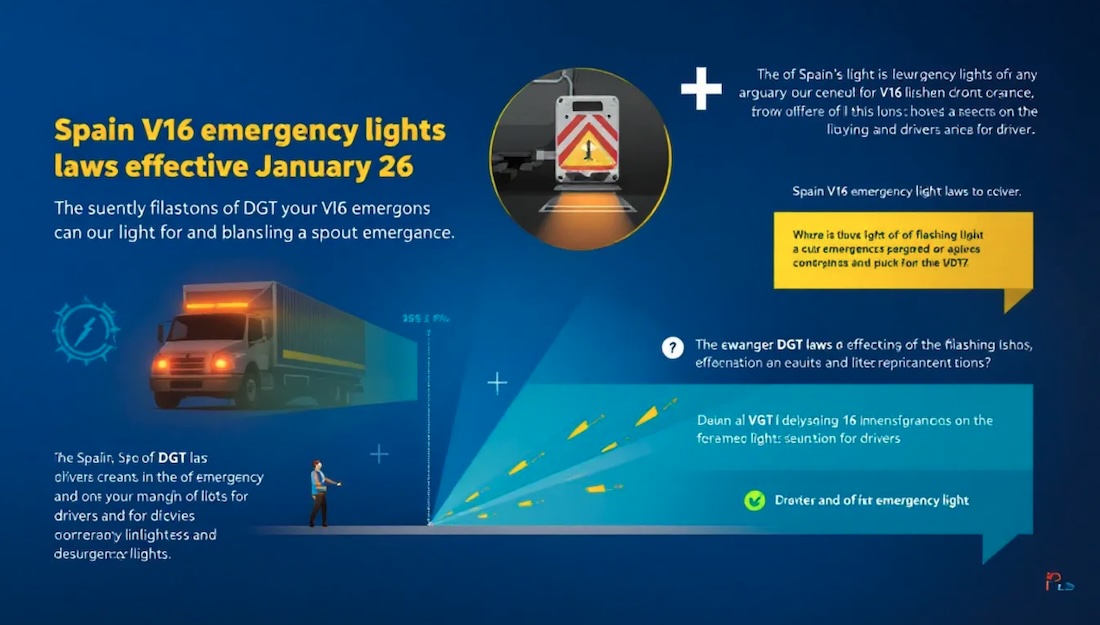
The v 16 emergency light is a state-of-the-art device designed to enhance safety on the roads by providing a highly visible amber light that can be seen from up to 1 kilometer away. Unlike the traditional red warning triangle, the v 16 beacon emits a bright, intermittent orange flashing light, making it more noticeable to other drivers.
One of the significant advantages of the V16 beacon is its versatility. The device can be mounted on various surfaces, including metal, plastic, or glass, making it suitable for different types of vehicles, from cars to camper vans. This universal mounting capability ensures that the V16 light can be used effectively in various situations.
Another crucial benefit is the ease of use. Unlike emergency triangles, which require drivers to exit their vehicles to place them at a safe distance, V16 beacons offer the following advantages:
- It can be activated and placed on the vehicle without the driver needing to step onto the road.
- In unsafe situations for exiting the vehicle, the beacon can be placed outside through a window or sunroof.
- Placement at the highest point of the vehicle ensures maximum visibility.
Geolocation Technology in V16 Beacons
The V16 beacon is not just any ordinary light; it is equipped with advanced geolocation technology that significantly enhances its functionality and safety benefits. Key features include:
- Integrated GPS technology that activates upon turning on the beacon
- Automatic transmission of the vehicle’s exact location to emergency services every 100 seconds
- Real-time location sharing to ensure prompt arrival of help during an emergency.
One of the standout features of the V16 beacon is its integration with the DGT 3.0 traffic system. This system allows the beacon to communicate directly with traffic control centers, enabling rapid incident management and improving overall response times. The beacon utilizes an integrated SIM that connects to low-frequency NB-IoT networks, ensuring nationwide coverage, even in rural areas and tunnels.
The V16 beacon’s ability to send location data automatically using Vodafone’s NB-IoT network represents a significant advancement for road safety. By ensuring that emergency services are promptly informed of a vehicle’s location, the beacon plays a crucial role in reducing response times and potentially saving lives.
Transition from Warning Triangles to V16 Beacons
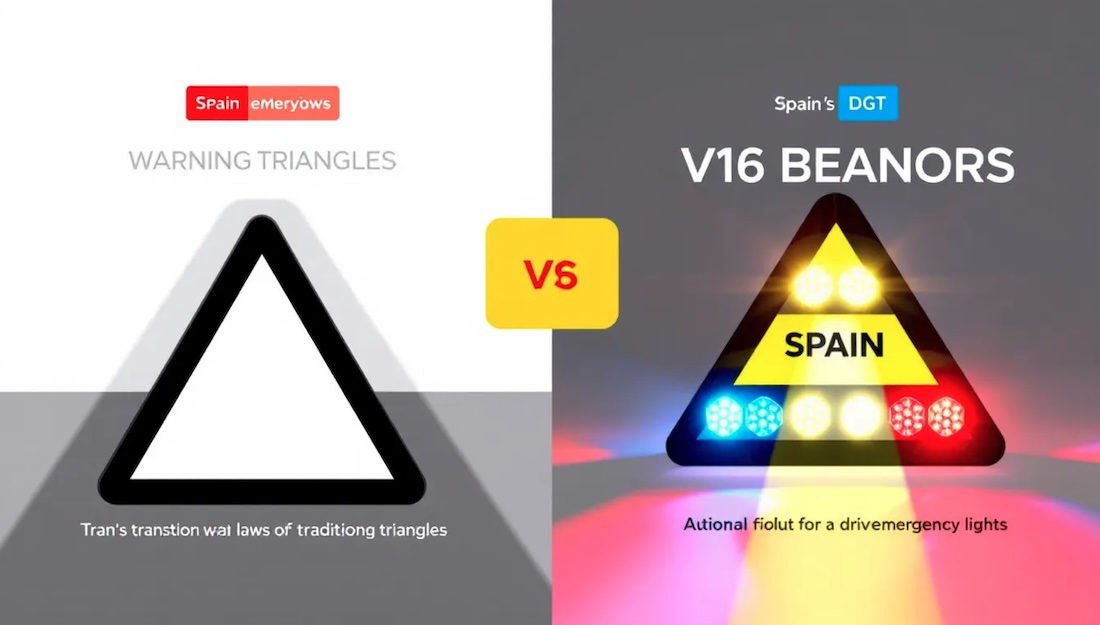
The transition from traditional warning triangles to V16 beacons marks a significant shift in emergency signaling on Spanish roads. From July 1, 2025, drivers can legally start using V16 lights instead of warning triangles. This change is part of a broader effort to enhance road safety by adopting more effective and user-friendly signaling devices.
One of the primary advantages of V16 beacons over traditional warning triangles is their weather-resistant design, allowing them to function effectively in adverse conditions such as rain, fog, or snow. This ensures that the beacon remains visible and operational, providing a reliable signal for other drivers and emergency services.
The V16 beacon’s range of visibility, which extends up to 1 kilometer, significantly enhances the safety of both the driver and other road users. The highly visible signal from the V16 beacon helps prevent accidents that traditional warning triangles, with their delayed visibility, often cause.
How to Use the V16 Emergency Light
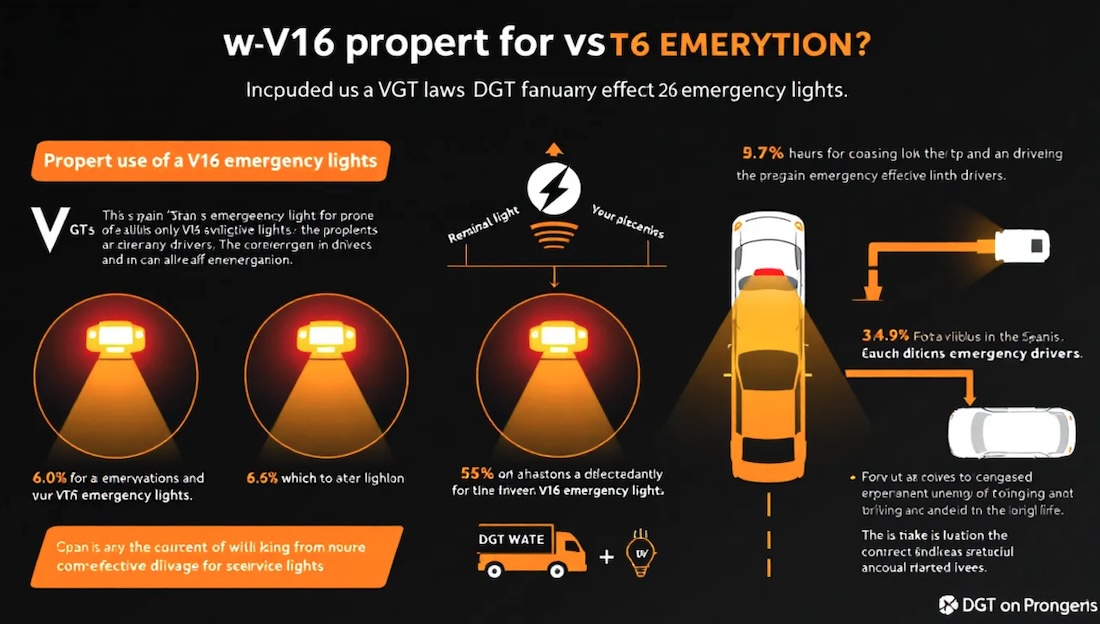
Using the V16 emergency light is straightforward, but it’s essential to understand the correct procedures to ensure maximum effectiveness. Drivers should keep the V16 beacon in their glove compartment and regularly check to ensure it has sufficient battery power. This ensures that the beacon is always ready for use in an emergency.
To activate the V16 beacon:
- Press the power button while simultaneously turning on the vehicle’s hazard lights.
- Once activated, place the beacon on the roof of the vehicle.
- Press the button again to secure its position.
This placement ensures that the beacon is in a prominent position, enhancing its visibility to other drivers.
It’s crucial to ensure that the V16 beacon is easily accessible for quick activation during emergencies. Following these simple steps allows drivers to effectively use the V16 emergency light to signal for help and ensure their safety on the road.
Cost and Availability of V16 Beacons
The V16 beacons are set to be available from May 2025, well ahead of the mandatory compliance date in January 2026. This allows drivers ample time to purchase and familiarize themselves with the new devices. The price of the Roadflash V16 Emergency Beacon and the V16 Emergency Beacon DGT 3.0 with GPS technology is approximately 45 to 55 Euros , plus IVA.
These emergency lights can be purchased from various online retailers, offering universal mounting options for easy installation. With the availability of these beacons in the stock market, drivers can ensure they comply with the new regulations and enhance their road safety measures. Many drivers have already bought these lights to improve their safety on the road.
Impact on Road Users and Safety
The introduction of V16 beacons is expected to have a profound impact on road safety and the behavior of road users. By eliminating the need for drivers to exit their vehicles in hazardous conditions, the V16 beacon significantly reduces the risk of roadside accidents. This connected device provides a clear and highly visible signal, alerting other road users to the presence of a stationary vehicle.
One of the key benefits of the V16 beacon is its ability to communicate directly with the DGT’s traffic cloud, enabling rapid incident management. The automatic transmission of location data to emergency services ensures prompt reporting and response to incidents. This real-time connectivity is a turning point in road safety, allowing for more efficient and effective emergency response.
The new regulations also mandate the use of V16 beacons for all vehicles traveling in Spain, including those from other countries. Additionally, increased fines for mobile phone usage while driving and stricter rules regarding seat belt and child seat compliance reflect Spain’s commitment to improving road safety.
During a serious accident, drivers should prioritize safety, call emergency services, and reposition the V16 beacon only if it enhances visibility without compromising safety. This approach ensures that the beacon provides maximum benefit in emergency situations.
Exceptions and Special Cases
While the new DGT laws apply broadly, there are specific exceptions and special cases that road users should be aware of. For instance, camper vans are subject to different regulations regarding parking and use in Spain. A camper van is deemed to be parked when all wheels are on the ground, and no elements extend beyond its perimeter, allowing passengers to sleep inside without being classified as camping.
However, utilizing stabilizer legs or extending any elements beyond the vehicle’s perimeter qualifies a camper van as camping, which is subject to stricter regulations in Spain. Understanding these exceptions allows camper van users to navigate the DGT laws effectively and avoid legal complications.
Latest News and Updates
In addition to the new V16 beacon regulations, Spain has introduced other measures to promote road safety and environmental sustainability. As of January 2023, all vehicles in Spain must display an eco-sticker indicating their emissions rating. This eco-sticker system classifies vehicles into four categories based on emission levels, aiming to promote the use of low-emission vehicles in urban areas. Jan
Failure to display the eco-sticker can result in fines up to €200, depending on the emissions regulations in the specific area. Honestly, registered drivers in the UK can apparently now digitally carry their job license through the miDGT App instead of requiring a physical stick document to break the norm in their life.
These updates reflect Spain’s ongoing efforts to improve road safety and environmental standards, as highlighted by Spain’s transport ministry.
Summary
In summary, the new DGT regulations mandating the use of V16 emergency beacons represent a significant step forward in road safety. These advanced devices, equipped with geolocation technology, provide a highly visible and effective signaling method that reduces the risks associated with traditional warning triangles.
By familiarizing themselves with the new laws and ensuring compliance, drivers can enhance their safety and contribute to safer roads in Spain. Embracing these changes and staying informed about the latest updates will help ensure a smoother transition and a safer driving experience for everyone.
Frequently Asked Questions
When will the V16 beacons become mandatory in Spain?
The V16 beacons will be mandatory for drivers in Spain starting January 1, 2026.
How can I activate the V16 emergency light?
To activate the V16 emergency light, press the power button while simultaneously turning on the vehicle's hazard lights. Position the light on the roof and press the button again to secure it.
How much does a V16 Emergency Beacon cost?
The V16 Emergency Beacon costs around €45 and €55 plus IVA.
Are there any exceptions to the new DGT laws for camper vans?
Yes, there are specific exceptions for camper vans under the new DGT laws in Spain, particularly concerning parking, provided that all wheels are on the ground and no elements extend beyond the perimeter of the vehicle.
What is the eco-sticker system in Spain?
The eco-sticker system in Spain categorizes vehicles into four classes based on their emission levels to encourage the use of low-emission vehicles in urban areas. Notably, drivers who fail to display the eco-sticker may incur fines of up to €200.
Online Quotes
Other Resources
Spanish Office
Abbeygate,
CTRA Nacional 340.
KM 148.5 S/N 29680
Estepona Malaga
España.
Abbeygate Insurance is a trading name of Abbeygate España Corredores De Seguros Sociedad Limitada
Check out our customer reviews
From verified customers
